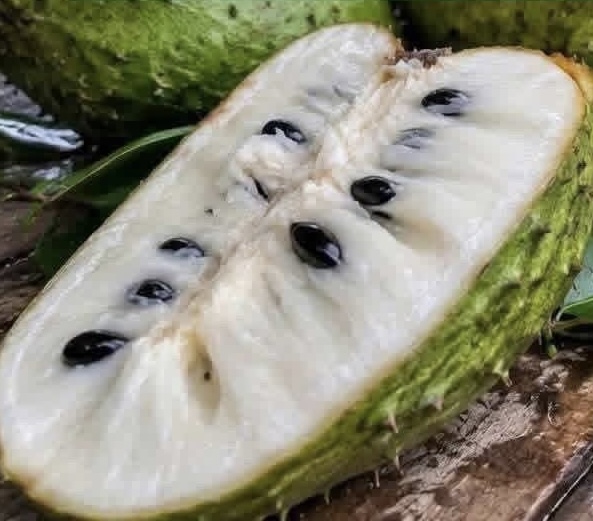
Soursop leaves come from the soursop tree (Annona muricata), a tropical plant widely grown in South America, Africa, Southeast Asia, and the Caribbean. The tree is best known for its large green fruit, but its leaves have also been used in traditional medicine for generations.
Many people prepare soursop leaves by boiling them in water to make an herbal tea. This natural drink is often consumed for relaxation and general wellness. In recent years, social media posts have claimed that soursop leaves can eliminate cancer cells, regulate blood sugar, and improve circulation. While some early scientific studies have explored these possibilities, more research is needed to confirm these health claims in humans.
Nutritional and Plant Compounds in Soursop Leaves
Soursop leaves contain various natural compounds, including:
- Antioxidants
- Flavonoids
- Alkaloids
- Tannins
- Acetogenins
These compounds may help protect cells from oxidative stress and contribute to the plant’s traditional medicinal uses. Antioxidants are especially important because they help neutralize free radicals that can damage cells over time.
Potential Benefits of Soursop Leaves Tea
Rich in Antioxidants
Soursop leaves contain antioxidants that may help support overall health. Antioxidants play a role in reducing oxidative stress, which is associated with aging and certain chronic diseases.
Adding antioxidant-rich foods and beverages to your diet can be part of a healthy lifestyle and may contribute to better long-term wellness.
May Support Relaxation
Traditional medicine often uses soursop leaves tea as a calming drink. Many people consume it in the evening to promote relaxation and reduce feelings of stress.
Although scientific evidence is still limited, drinking warm herbal tea can be a soothing ritual that supports mental well-being and relaxation.
May Help Support Healthy Blood Sugar Levels
Some laboratory and animal studies have suggested that compounds in soursop leaves may influence glucose metabolism. However, there is not enough evidence to conclude that drinking soursop leaves tea can treat diabetes or replace medical care.
People with blood sugar concerns should always follow professional medical advice and use herbal remedies only as complementary practices.
May Have Anti-Inflammatory Properties
Inflammation is the body’s natural response to injury or infection. Some compounds found in soursop leaves have demonstrated anti-inflammatory activity in preliminary studies.
Reducing chronic inflammation through a balanced diet and healthy lifestyle can contribute to overall wellness. However, soursop leaves should not be considered a medical treatment for inflammatory conditions.
Can Soursop Leaves Eliminate Cancer Cells?
One of the most common claims circulating online is that boiled soursop leaves can eliminate cancer cells. This statement can be misleading.
Researchers have studied certain compounds found in soursop in laboratory settings. Some studies showed that these compounds affected cancer cells in test tubes. However, laboratory findings do not prove that drinking soursop leaves tea can prevent, treat, or cure cancer in humans.
At present, there is no reliable clinical evidence showing that soursop leaves tea can replace established cancer treatments. Anyone facing a cancer diagnosis should always seek guidance from qualified healthcare professionals and follow evidence-based medical treatments.
Traditional Uses of Soursop Leaves
For centuries, people in tropical regions have used soursop leaves for various traditional purposes, including:
- Preparing herbal tea
- Supporting relaxation
- Promoting digestive comfort
- Using leaves in traditional wellness practices
Traditional use does not necessarily confirm medical effectiveness, but it highlights the cultural importance of this plant and its long history in herbal medicine.
How Soursop Leaves Tea Is Commonly Prepared
Many people prepare soursop leaves tea by boiling fresh or dried leaves in water for several minutes and then allowing the mixture to cool before drinking.
The tea has an earthy, slightly bitter taste that some people enjoy on its own, while others prefer to add lemon or honey for additional flavor.
Moderation is important when consuming any herbal beverage, especially if it is used regularly.
Are There Any Risks?
Although soursop leaves are natural, natural does not always mean risk-free.
Excessive consumption may not be suitable for everyone. Individuals who are pregnant, breastfeeding, taking medications, or managing chronic health conditions should consult a healthcare professional before using herbal preparations regularly.
Using soursop leaves tea responsibly and as part of a balanced lifestyle is generally the safest approach.
Final Thoughts
Soursop leaves have been valued in traditional medicine for generations and contain several natural compounds with antioxidant and potentially beneficial properties. Drinking soursop leaves tea may support relaxation and contribute to overall wellness when consumed responsibly.
However, claims that boiled soursop leaves can eliminate cancer cells or cure serious diseases are not supported by sufficient scientific evidence in humans. Soursop leaves tea should be viewed as a traditional herbal beverage rather than a replacement for professional medical treatment.
Incorporating herbal teas into a healthy lifestyle can be enjoyable, but informed and balanced expectations are essential when exploring natural remedies.