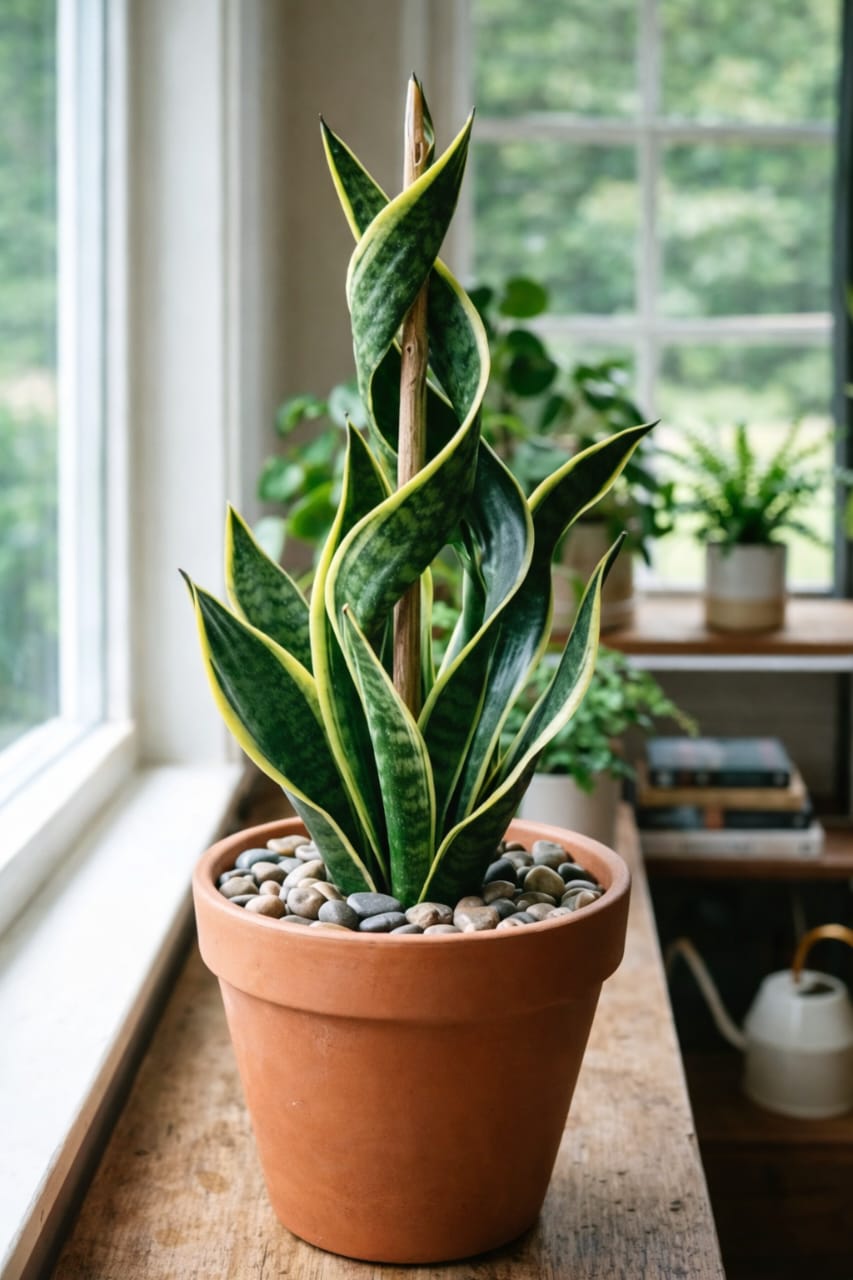
Snake plants are one of the most popular choices for modern homes. Their upright structure, deep green tones, and clean lines make them a favorite in luxury interiors, minimalist spaces, and even high-end real estate staging.
A healthy snake plant instantly makes a room feel more structured, more polished, and more intentional.
But when a snake plant starts losing its strength, the change is noticeable.
Leaves begin to soften. Growth slows down. The tall, firm structure becomes weaker and less impressive. What once looked like a premium decor piece starts to feel neglected.
That’s when many homeowners begin looking for a simple solution.
Recently, a method has been getting attention — pouring a small amount of white liquid into the soil. In many videos, the transformation looks fast and dramatic.
But smart homeowners understand something important.
It’s not magic.
And the real reason behind the recovery goes much deeper.
Why Snake Plants Start Losing Strength Indoors
Snake plants are known for being low maintenance, but that doesn’t mean they are immune to problems.
When conditions are not ideal, they show clear signs.
Common symptoms include:
- Soft or bending leaves
- Faded green color
- Slow or no growth
- Leaves losing their upright form
- Weak root structure
- A dull, tired appearance
In most homes, the issue is not just one mistake. It’s usually a combination of overwatering, poor drainage, low light, or compact soil.
Why People Are Using a White Liquid on Snake Plants
The white liquid method is popular because it feels simple and effective.
Homeowners are attracted to it because they want:
- A quick way to revive their plant
- A visible improvement in growth
- A simple routine without complex care
- A healthier-looking indoor plant
In videos, just one pour seems to bring the plant back to life.
But the liquid itself is not the real solution.
What the White Liquid Method Is Really About
The purpose of using a white liquid is not to instantly fix the plant.
It is meant to support the plant while proper care is being restored.
Some believe it may help:
- Support light nutrient balance
- Improve soil condition temporarily
- Encourage stronger-looking growth
- Assist recovery after stress
But none of this works without one essential factor.
Healthy roots.
What Smart Homeowners Check First
Before adding anything, experienced plant owners always check the basics.
They look at:
- Root condition (firm or rotting)
- Soil quality (loose or compacted)
- Drainage system
- Watering habits
- Light exposure
Because if these are wrong, no liquid will fix the plant.
When This Method May Actually Help
A light support method like this may be useful when:
- The roots are still healthy
- The plant is slightly weak but not damaged
- Soil condition is acceptable or recently refreshed
- Light and watering are being corrected
- The plant is in a recovery phase
In this situation, it becomes a small part of a bigger solution.
When It Will NOT Work
This method will not help if the real issue is serious.
It usually fails when:
- Roots are rotting
- Soil stays wet for too long
- The pot has poor drainage
- The plant is in low light
- The root system is damaged
In these cases, the problem is below the surface.
How to Use It Safely
If you decide to try it, keep it very simple and controlled.
A safe approach includes:
- Making sure the soil is not soggy
- Using a small amount only
- Pouring gently into the soil, not directly on the leaves
- Avoiding repeated use too often
- Keeping the plant in bright indirect light
Too much can create more stress than benefit.
Common Mistakes That Make Snake Plants Worse
When trying to fix a weak plant, people often overdo it.
Avoid these mistakes:
- Pouring too much liquid
- Ignoring root health
- Watering too frequently
- Keeping old compact soil
- Expecting instant transformation
- Treating symptoms instead of the cause
Real improvement comes from consistency, not quick fixes.
Root Health Is the Real Secret
This is the most important truth.
Snake plants depend on strong, dry, well-aerated roots.
A proper setup includes:
- Well-draining soil mix
- A pot with good drainage holes
- Bright indirect light
- Controlled watering
- Occasional soil refresh
When roots are healthy, the plant naturally becomes stronger and taller.
Step-by-Step Snake Plant Recovery Plan
If your plant looks weak, follow this:
- Check the roots carefully
- Remove any soft or damaged roots
- Repot in fresh, well-draining soil if needed
- Improve light conditions
- Reduce watering frequency
- Use gentle support methods only when appropriate
This approach is far more effective than relying on one trick.
Quick Fix Table for Weak Snake Plants
| Problem | Better Fix |
|---|---|
| Soft leaves | Reduce watering and check roots |
| Slow growth | Improve light exposure |
| Weak structure | Strengthen root system |
| Soggy soil | Improve drainage immediately |
| Pale color | Adjust light and care routine |
| No growth | Refresh soil and stabilize conditions |