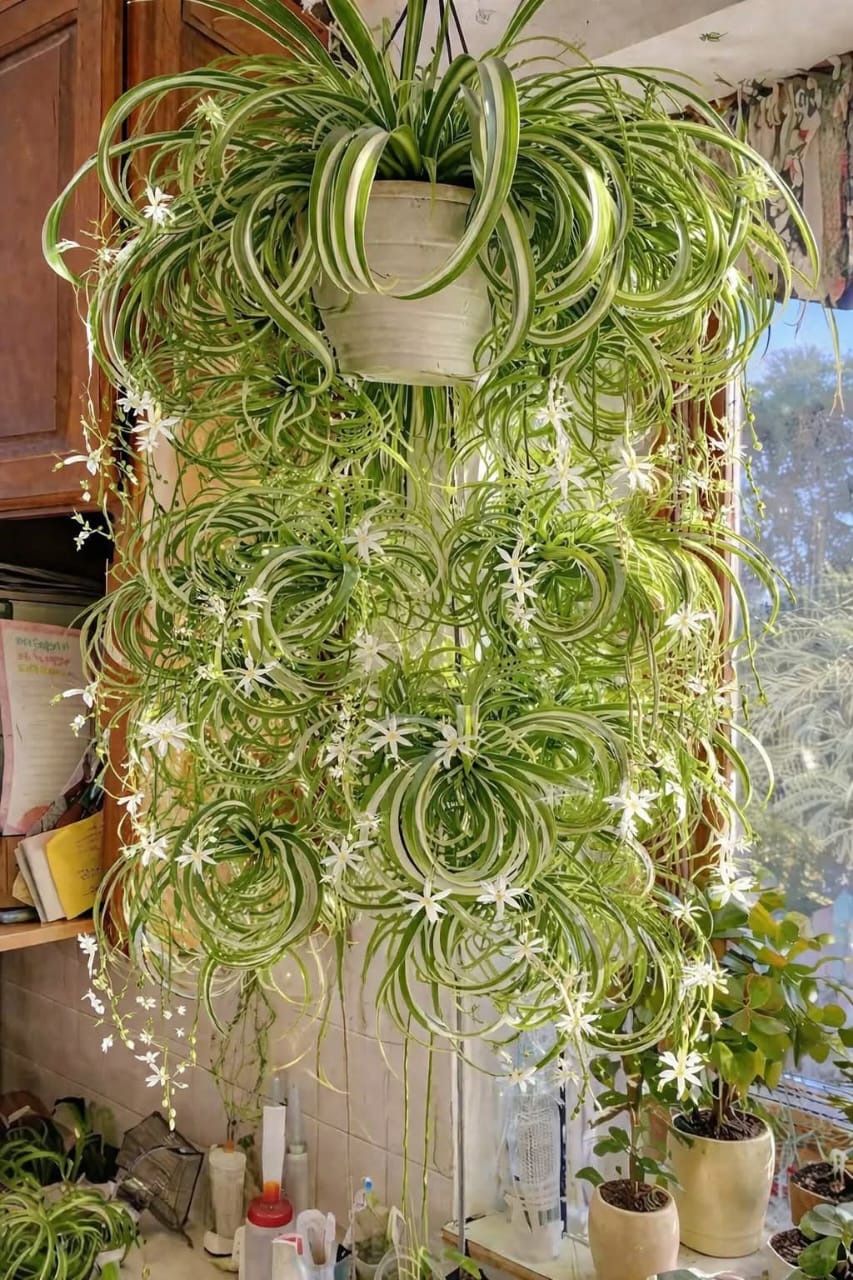
Spider plants are one of the most popular indoor plants for a reason. Their long arching leaves, cascading shape, and delicate white flowers can instantly make a room feel fresh, clean, and thoughtfully styled. In many modern homes, a full spider plant is not just greenery — it becomes part of the interior design.
But when a spider plant starts looking weak, everything changes.
The leaves lose their strength. Growth slows down. The once full, flowing shape begins to look thin and tired. And suddenly, that vibrant decorative piece starts to feel neglected.
That’s when many homeowners start searching for a simple fix.
Recently, a method has been gaining attention — a spoonful of white powder lightly sprinkled into the soil. It looks simple. Almost too simple. And in many videos, the transformation looks dramatic.
But smart homeowners know something important.
It’s not magic.
And the real story goes much deeper.
Why Spider Plants Start Looking Weak Indoors
Spider plants are resilient, but they respond quickly to their environment. When something is off, they show it.
Common signs of a weak spider plant include:
- Pale or yellowing leaves
- Slow or no new growth
- Thin, lifeless trailing stems
- Fewer baby plants (spiderettes)
- Dry or weak root system
- Overall dull appearance
In most homes, the issue is not one single mistake. It’s usually a mix of small problems building over time.
Why People Are Using a White Powder on Spider Plants
The white powder method has become popular because it feels easy and accessible.
Homeowners are drawn to it because they want:
- A quick way to support plant growth
- A simple routine without complicated care
- A cleaner, healthier-looking soil surface
- A visible transformation
In many viral videos, just one spoon seems to bring a plant back to life.
But here’s the truth.
The powder is not the real solution.
What the White Powder Method Is Really About
The idea behind the powder is not to “fix” the plant instantly.
It’s meant to support the plant while better care is being applied.
Depending on how it’s used, people believe it may help:
- Lightly support nutrient balance
- Improve soil surface condition
- Encourage healthier-looking growth
- Assist recovery after stress
But none of that works without one key factor.
Healthy roots.
What Smart Plant Owners Check First
Before adding anything to the soil, experienced plant owners look deeper.
They check:
- Are the roots healthy or compacted?
- Is the soil old and dense?
- Is the plant staying wet too long?
- Does the pot drain properly?
- Is the plant getting bright indirect light?
Because if these are wrong, no powder will fix the problem.
When This Method May Actually Help
A light powder method may support your plant if:
- The roots are still healthy
- The soil is not completely degraded
- You are already improving watering habits
- The plant is in a recovery phase
- Light conditions are good
In this case, it becomes a small support tool, not a miracle.
When It Will NOT Work
This is where many people go wrong.
The powder will not help if:
- Roots are rotting
- Soil smells sour or stays wet
- Drainage is poor
- The plant sits in low light
- The root system is already damaged
In these cases, the real problem is below the surface.
How to Use It Safely
If you choose to try it, the key is moderation.
A safe approach looks like this:
- Make sure soil is not soggy
- Use only a small amount
- Sprinkle lightly on the soil surface
- Avoid buildup near the base of the plant
- Do not overwater afterward
- Keep the plant in bright indirect light
Too much can create stress instead of helping.
Common Mistakes That Make Spider Plants Worse
When trying to “save” a plant, people often do too much.
Avoid these mistakes:
- Adding too much powder
- Ignoring root health
- Watering too frequently
- Keeping old compact soil
- Expecting instant results
- Treating symptoms instead of causes
Real recovery takes small, consistent improvements.
Root Health Is Everything
This is the core truth.
A spider plant grows strong only when its roots are healthy.
A better setup includes:
- Light, well-draining soil
- A pot with proper drainage
- Bright indirect sunlight
- Balanced watering
- Occasional soil refresh
When roots improve, everything else follows.
Step-by-Step Spider Plant Recovery Plan
If your plant looks weak, focus on this:
- Check the roots carefully
- Remove any damaged roots
- Refresh the soil if needed
- Improve light exposure
- Adjust watering frequency
- Use gentle support methods only if needed
This approach works far better than any quick trick.
Quick Fix Table for Weak Spider Plants
| Problem | Better Fix |
|---|---|
| Yellow leaves | Adjust watering and check roots |
| Slow growth | Improve light and refresh soil |
| Weak stems | Support root health |
| Soggy soil | Improve drainage immediately |
| No baby plants | Increase light and stability |
| Dull appearance | Focus on overall care routine |